The 12-Step Evolution: Understanding the Principles and Adaptations of This Foundational Recovery Program

In the realm of addiction recovery, few approaches have stood the test of time like 12-step programs. Originating from humble beginnings, these programs have evolved into a global cornerstone for individuals seeking sobriety and personal growth. This article delves into their rich history, underlying philosophy, core principles, and modern adaptations. Whether you're exploring recovery options for yourself or a loved one, understanding the 12-step model can provide reassurance that accessible, community-driven support is within reach. As a free resource, it empowers millions, fostering lasting change through structured yet flexible steps.
Get Help with 12-Step Recovery – Call Now
The Historical Roots of 12-Step Programs
The story of 12-step programs begins in the 1930s amid the Great Depression, a time when alcohol addiction ravaged lives without many viable treatments. Alcoholics Anonymous (AA), the progenitor of all 12-step fellowships, was founded in 1935 by Bill Wilson and Dr. Bob Smith in Akron, Ohio. Wilson, a stockbroker struggling with alcoholism, experienced a spiritual awakening after connecting with Smith, a surgeon facing similar demons. Their chance meeting sparked a revolutionary idea: recovering alcoholics could help each other through mutual support, anonymity, and a spiritual framework.
This grassroots movement drew inspiration from the Oxford Group, a Christian fellowship emphasizing personal inventory, amends, and service to others. Wilson formalized these ideas into the "Big Book" – Alcoholics Anonymous: The Story of How Many Thousands of Men and Women Have Recovered from Alcoholism – published in 1939. By sharing personal stories and outlining 12 steps, the book democratized recovery, making it accessible beyond clinical settings.
Philosophically, 12-step programs blend spirituality, psychology, and community. They view addiction not merely as a physical ailment but as a spiritual malady requiring holistic healing. The emphasis on a "higher power" – interpretable as God, nature, or the group itself – encourages humility and surrender, countering the isolation of addiction. Over decades, this philosophy has proven resilient, adapting to cultural shifts while maintaining its core ethos of one day at a time.
Today, AA boasts over 2 million members worldwide, with meetings in more than 180 countries. Its success lies in anonymity, which reduces stigma, and its non-professional structure, ensuring it's volunteer-led and free. This historical evolution underscores why 12-step programs remain a beacon for those navigating recovery's complexities.
The Philosophy Underpinning 12-Step Recovery
At its heart, the 12-step philosophy promotes transformation through self-reflection and communal bonds. It posits that addiction stems from deeper issues like resentment, fear, and ego, which steps address systematically. Unlike rigid therapies, it's adaptable, allowing participants to progress at their own pace.
Key philosophical tenets include:
- Spiritual Awakening: Not necessarily religious, this involves recognizing a power greater than oneself to restore sanity.
- Anonymity and Humility: Protecting privacy fosters trust, while humility combats the self-centeredness often fueling addiction.
- Service to Others: Helping fellow members reinforces personal sobriety, creating a cycle of mutual aid.
- Lifelong Commitment: Recovery is ongoing, with steps revisited as needed.
This philosophy reassures participants that they're not alone. In an authoritative sense, research from organizations like the National Institute on Drug Abuse (NIDA) supports its efficacy, showing improved outcomes when integrated with professional treatment. It's a testament to how timeless principles can evolve to meet contemporary needs.
Core Principles: Surrender, Inventory, Amends, and Service
The 12 steps form the blueprint for recovery, grouped into principles like surrender, inventory, amends, and service. Let's break them down, highlighting their practical application.
Surrender: Acknowledging Powerlessness
The first three steps focus on surrender:
- Admitting powerlessness over addiction and that life has become unmanageable.
- Believing a higher power can restore sanity.
- Deciding to turn one's will over to that power.
Surrender isn't defeat; it's empowerment. It shifts focus from solitary struggle to acceptance, paving the way for growth. For many, this principle brings immediate relief, as it normalizes the chaos of addiction.
Inventory: Self-Examination
Steps four through seven emphasize personal inventory:
- Conducting a fearless moral inventory.
- Admitting wrongs to oneself, a higher power, and another person.
- Becoming ready to have defects removed.
- Humbly asking for their removal.
This introspective process uncovers patterns, fostering accountability. It's reassuring to know that inventory isn't judgmental but a tool for liberation, often guided by sponsors – experienced members offering mentorship.

Amends: Making Restitution
Steps eight and nine involve amends:
- Listing those harmed and becoming willing to make amends.
- Directly making amends where possible, without causing further harm.
Amends restore relationships, alleviating guilt. This principle teaches responsibility, turning past mistakes into opportunities for reconciliation. It's authoritative in its impact, often leading to profound emotional healing.
Service: Giving Back
The final steps – ten through twelve – center on service:
- Continuing personal inventory and promptly admitting wrongs.
- Seeking conscious contact with a higher power through prayer and meditation.
- Carrying the message to others and practicing principles in all affairs.
Service solidifies recovery by shifting focus outward. Sponsoring newcomers or organizing meetings reinforces sobriety, creating a supportive ecosystem.
These principles aren't linear; they're iterative, adaptable to individual journeys. Their universality makes 12-step programs a reliable foundation for diverse recoveries.
Adaptations for Various Substances and Behaviors
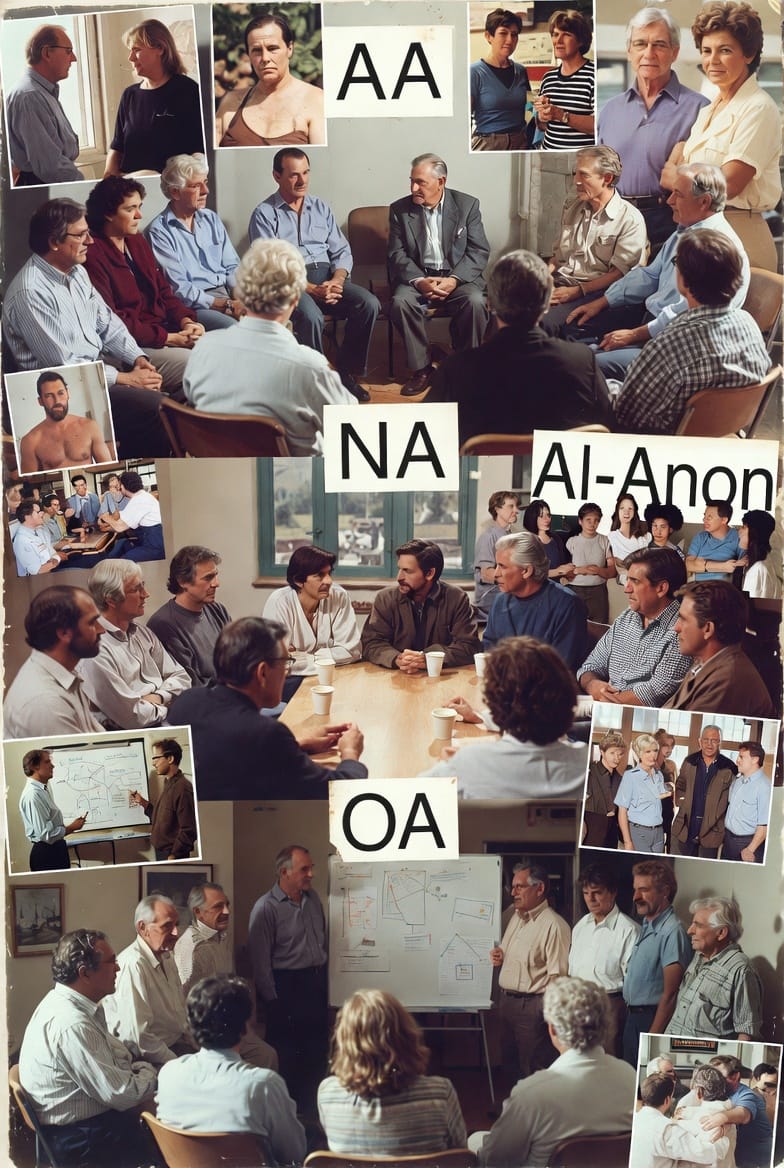
What began with alcohol has expanded remarkably. The 12-step model adapts seamlessly to other addictions, maintaining core steps while tailoring language and focus. This evolution ensures inclusivity, addressing substances like drugs and behaviors like gambling or overeating.
Common adaptations include:
- Alcoholics Anonymous (AA): Focuses on alcohol, with steps emphasizing sobriety from drinking.
- Narcotics Anonymous (NA): Adapts for drug addiction, using "addict" instead of "alcoholic" for broader appeal.
- Al-Anon: Supports families and friends of alcoholics, applying steps to cope with loved ones' addiction.
- Overeaters Anonymous (OA): Addresses compulsive eating, framing food as the addictive substance.
Other variants cover sex addiction (Sexaholics Anonymous), gambling (Gamblers Anonymous), and even debt (Debtors Anonymous). These adaptations preserve anonymity and spirituality while incorporating specific tools, like food plans in OA.
This flexibility highlights the program's strength: it's not one-size-fits-all but evolves with societal needs. For behavioral addictions, steps emphasize triggers and coping, proving effective in non-substance contexts.
In multicultural settings, programs like AA in indigenous communities integrate local traditions, enhancing relevance. Online meetings, accelerated by the pandemic, make adaptations even more accessible, bridging geographical barriers.
The Role of 12-Step Programs as a Free Community Resource
One of the most reassuring aspects of 12-step programs is their availability. As non-profit, volunteer-run entities, they're free, relying on member contributions. This democratizes recovery, removing financial hurdles that deter many from seeking help.
Meetings occur in community centers, churches, and online, offering daily support. The peer-led model builds trust, as facilitators share lived experiences. Studies, such as those in the Journal of Substance Abuse Treatment, affirm their role in long-term abstinence, especially when combined with therapy.
As a community resource, they combat isolation – a key addiction driver. Regular attendance fosters belonging, with traditions like sharing and chips (for sobriety milestones) celebrating progress. For underserved populations, like rural or low-income groups, they're often the primary support.
Integration with professional care amplifies benefits. Many rehabs incorporate 12-step facilitation, blending steps with evidence-based therapies. This hybrid approach reassures that 12-steps aren't standalone but enhance comprehensive recovery.
Challenges and Modern Evolutions
While transformative, 12-step programs aren't without critique. Some view the spiritual emphasis as exclusionary, prompting secular adaptations like SMART Recovery. Others note gender imbalances in early literature, leading to women-only meetings.
Evolutions address these: apps track steps, virtual reality simulates meetings, and inclusive language broadens appeal. Despite challenges, their adaptability ensures relevance in a digital age.
Embracing the 12-Step Journey
The 12-step evolution from a small fellowship to a global movement exemplifies resilience. By understanding its history, philosophy, principles, and adaptations, you gain insight into a proven path for recovery. It's authoritative in its simplicity, reassuring in its community focus.
Begin Healing with Proven Steps – Call Us Today