Security Without the False Alarms: Designing a Pet-Immune, Family-Friendly Security System
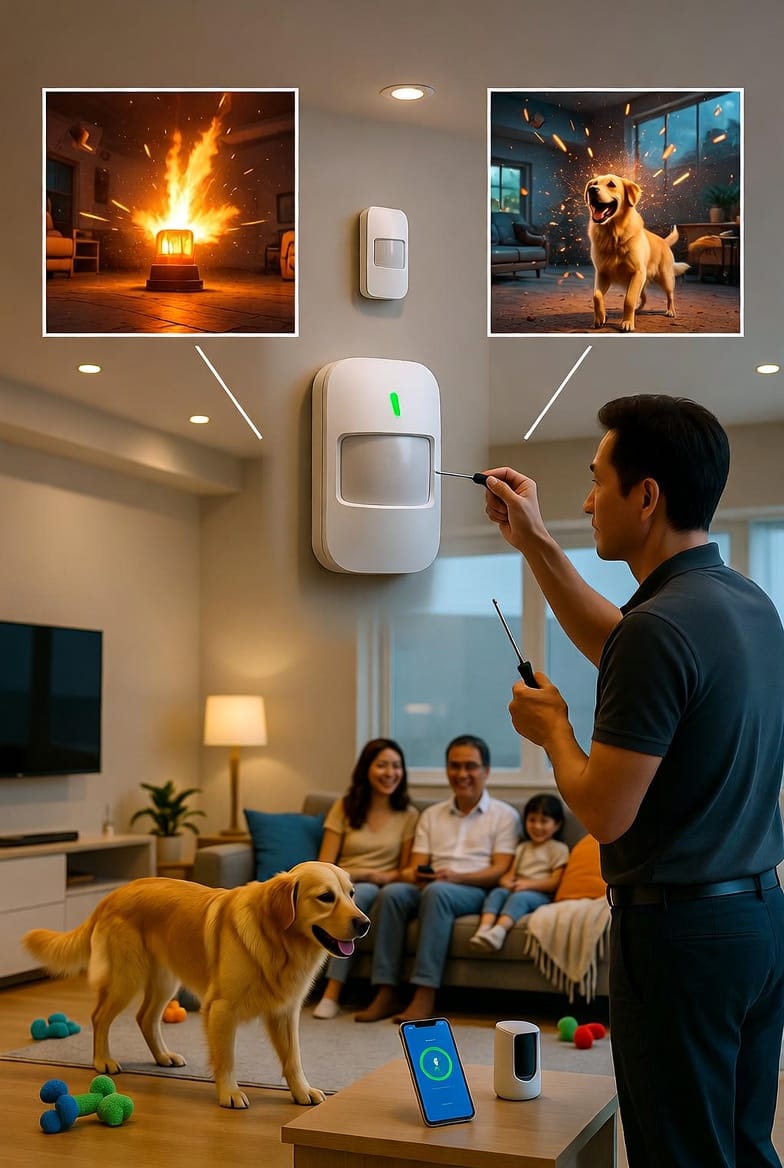
In today's fast-paced world, home security is more than just protection—it's about creating a safe haven for your entire family, including your furry companions. If you're a pet owner, you've likely experienced the frustration of false alarms triggered by your cat jumping on the counter or your dog chasing a toy across the living room. These unnecessary alerts not only disrupt your peace but can also lead to alarm fatigue, where you start ignoring notifications altogether, compromising your home's safety. But what if you could design a pet-immune security system that distinguishes between your beloved pets and potential intruders? This comprehensive guide explores how to build a family-friendly security setup that eliminates false alarms without confining your pets or sacrificing protection.
Enjoy Peace of Mind for You & Your Furry Friends – Call Today
As experts in pet-friendly home security, we'll delve into the cutting-edge technology behind pet-immune motion sensors, offer practical advice on strategic sensor placement, and explain how to customize entry delay settings for a seamless experience. By the end, you'll feel empowered to create a system that's as reliable as it is reassuring. Whether you're dealing with a mischievous kitten or a energetic pup, a well-designed setup ensures everyone stays safe and stress-free.
Understanding the Pain Point: False Alarms and Their Impact on Pet Owners
False alarms are a common headache for pet owners investing in home security. According to industry insights, up to 70% of alarm activations are false, with pets being a leading culprit. This not only wastes time but can result in fines from local authorities or even canceled monitoring services. Imagine rushing home from work only to find your dog wagging its tail innocently while the siren blares—it's exhausting and undermines trust in your system.
The good news? Modern pet-immune technology addresses this directly. These systems use advanced algorithms to differentiate between pets and humans, allowing your animals to move freely while keeping intruders at bay. In this guide, we'll break down how to implement these solutions, ensuring your home security is tailored to your lifestyle. No more choosing between pet freedom and family safety— you can have both.
Why Pet-Immune Systems Matter for Families
For families with pets, security isn't just about locks and cameras; it's about integration. Pets are family members, and confining them to crates or separate rooms during arming periods defeats the purpose of a welcoming home. A pet-immune security system promotes:
- Freedom for Pets: No more restricted movement, reducing anxiety in animals.
- Peace of Mind for Owners: Fewer false alerts mean you can trust notifications when they matter.
- Cost Savings: Avoid unnecessary emergency responses and potential fees.
- Enhanced Family Bonding: Enjoy quality time without security interruptions.
By focusing on pet compatibility from the start, you're investing in a system that grows with your household.
The Technology Behind Pet-Immune Motion Sensors
At the heart of a false-alarm-free security system lies pet-immune motion sensors. These aren't your basic detectors; they're sophisticated devices engineered to ignore pet activity while detecting human threats. Let's explore the science that makes this possible.
Weight and Heat Signature Discrimination: How It Works
Traditional motion sensors rely solely on infrared (IR) detection, sensing changes in heat patterns. However, pets emit heat too, often triggering alerts. Pet-immune sensors advance this by incorporating dual-technology: passive infrared (PIR) combined with microwave or ultrasonic waves.
- Heat Signature Analysis: Sensors evaluate the size and intensity of heat sources. Pets typically have smaller, lower heat profiles compared to humans. For instance, a 40-pound dog might register as a minor fluctuation, while a 150-pound intruder triggers an alert.
- Weight Discrimination: Advanced models use algorithms to estimate "mass" based on movement speed and pattern. Pets move in short bursts or low to the ground, whereas humans exhibit taller, more deliberate strides.
- Lens Design: Fresnel lenses focus detection zones, creating "pet alleys" below 2-3 feet where animals can roam undetected.
This discrimination ensures accuracy rates above 95%, minimizing false positives. Brands like Honeywell and DSC lead in this tech, offering sensors tunable for pets up to 100 pounds.
Dual-Technology Sensors for Added Reliability
To further reduce errors, opt for dual-tech sensors that require both PIR and microwave confirmation before alerting. This cross-verification filters out environmental factors like drafts or sunlight, which might fool single-tech units.
In practice, this means your cat can nap on the windowsill without issue, but a burglar attempting entry will be caught instantly. It's a reassuring layer of intelligence that makes your system truly family-friendly.
Strategic Sensor Placement: Avoiding Pet Triggers
Technology alone isn't enough—placement is key to a pet-immune setup. Poor positioning can negate even the best sensors, leading to persistent false alarms. Here's how to strategically place them for optimal performance.
Optimal Mounting Heights and Angles
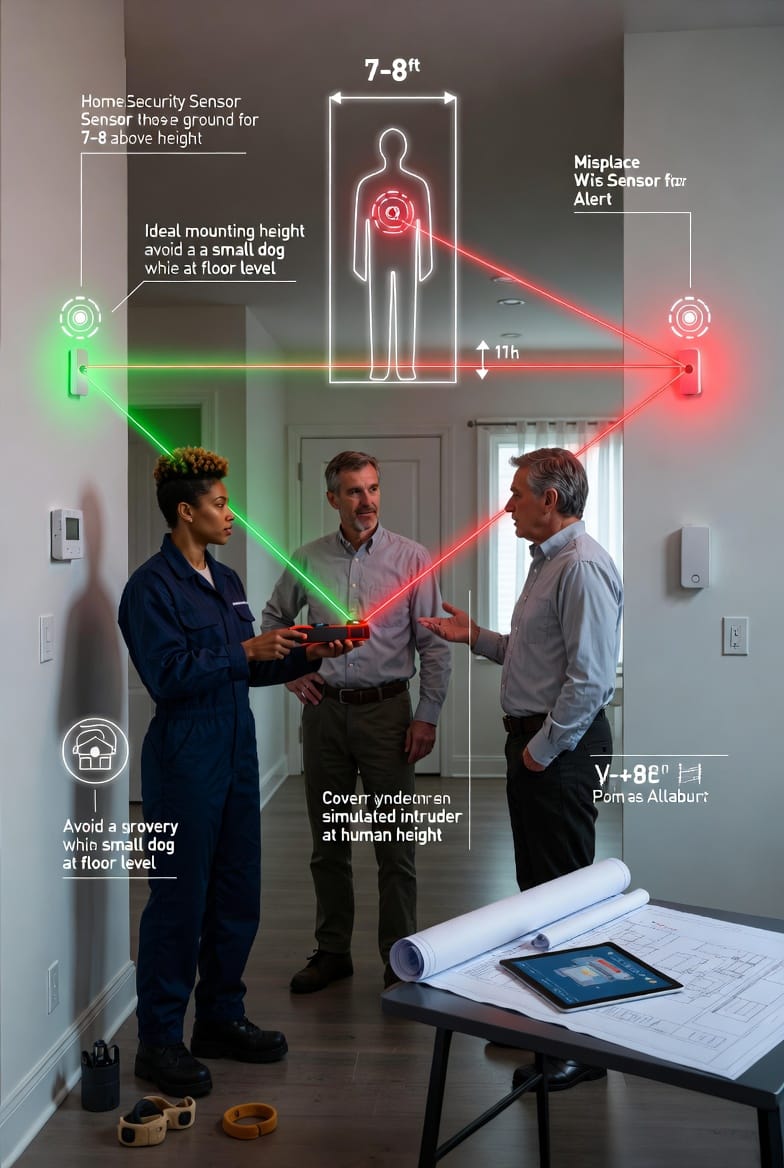
Mount sensors at 7-8 feet high, angled downward at 45 degrees. This creates a detection cone that covers human-height entry points while bypassing floor-level pet activity.
- Living Room Setup: Place sensors in corners, avoiding direct lines to pet beds or play areas.
- Kitchen Considerations: Mount above counters to detect standing intruders, not countertop-curious cats.
- Hallway Placement: Use narrow-beam sensors for corridors, ensuring pets can pass without triggering.
Professional installation ensures precise calibration, often including on-site testing with your pets present.
Common Placement Mistakes and How to Fix Them
Avoid these pitfalls:
- Too Low Mounting: Sensors at 5 feet catch pet jumps—raise them.
- Facing Windows: Sunlight can cause false triggers—reposition inward.
- Over Pet Zones: Relocate away from feeding areas.
By auditing your home's layout, you can create "pet-safe zones" that maintain comprehensive coverage.
Customizing Entry Delay Settings for Pets and Family
A pet-immune system extends beyond sensors to how the entire setup responds. Entry delay settings are crucial, allowing time for disarming without immediate alarms—perfect for families with pets or forgetful members.
Balancing Security with Convenience
Standard delays are 30-60 seconds, but customize based on your needs:
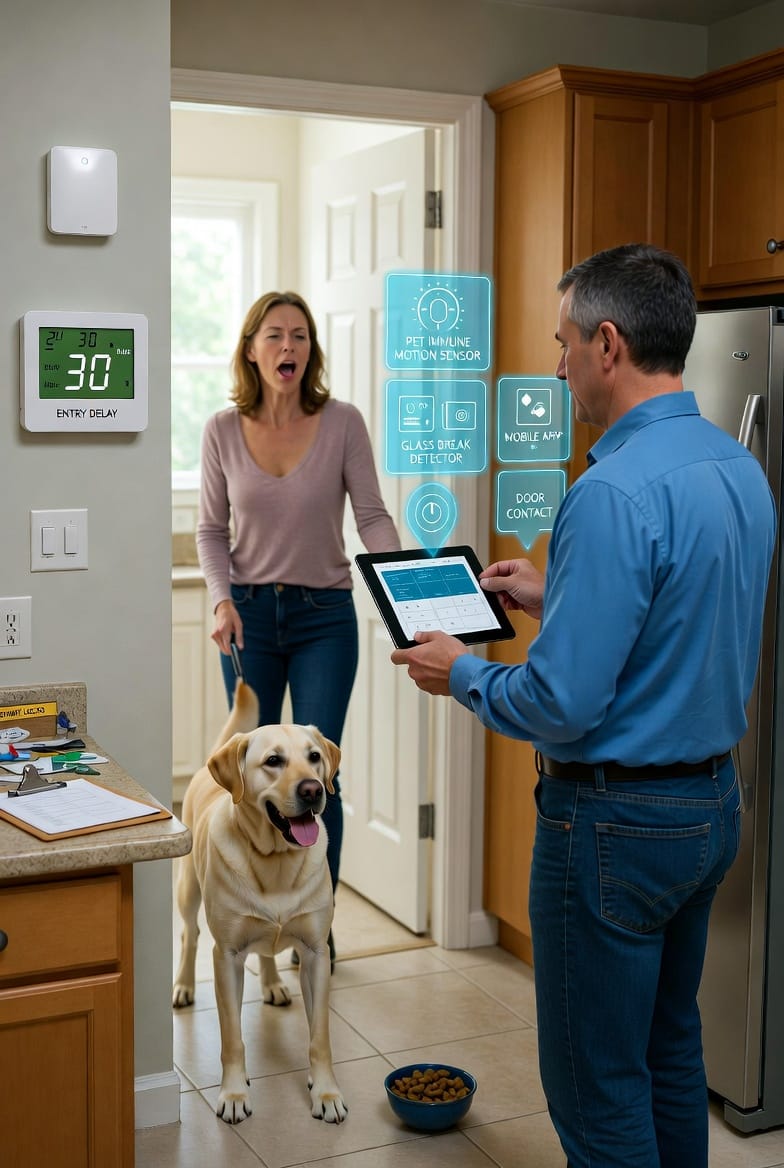
- Pet Accommodation: If your dog greets you at the door, extend delays to 45 seconds, giving time to enter codes without rushing.
- Family-Friendly Adjustments: For kids or elderly members, voice-activated disarming adds ease.
- Zoned Delays: Set longer delays for pet-heavy areas like back doors, shorter for vulnerable entry points.
This flexibility ensures security without frustration, keeping everyone safe.
Integrating with Smart Home Features
Link your system to apps for remote adjustments. Receive pet-specific notifications, like "Pet activity detected—no alert needed," building confidence.
Additional Features for Comprehensive Pet-Friendly Protection
Beyond core sensors, enhance your system with:
- Glass Break Detectors: Audio sensors that ignore pet noises but detect shattering.
- Door/Window Contacts: Magnetic sensors for entry points, pet-proof by design.
- Cameras with AI: Distinguish pets from people, reducing unnecessary footage reviews.
These add-ons create a layered defense, authoritative in its thoroughness.
Training Your System and Pets
Initial setup includes "learning modes" where the system adapts to your pets' patterns. Gentle pet training, like associating alarms with treats (positively), reinforces harmony.
Maintenance and Upgrades for Long-Term Reliability
Regular checks ensure longevity:
- Battery Replacements: Every 2-3 years.
- Firmware Updates: For improved discrimination.
- Professional Audits: Annual reviews catch issues early.
Upgrading to wireless systems adds flexibility for growing families.
Real-Life Success Stories
Many pet owners have transformed their security woes. One client with three cats reported zero false alarms post-installation, reclaiming their peace. Another with large dogs praised customizable delays for seamless routines.
These stories underscore that a pet-immune system isn't luxury—it's essential.
Conclusion: Protect Your Home Without Confining Your Pets
Designing a pet-immune, family-friendly security system solves the false alarm dilemma, blending advanced technology with thoughtful placement and settings. With weight and heat signature discrimination, strategic positioning, and tailored delays, you achieve robust protection that respects your pets' freedom.
Our experts are ready to create a customized solution, ensuring your home is secure, serene, and SEO-optimized for pet lovers everywhere.
Pet-Proof Home Security Starts Here – Get Your Free Quote