Nature's Pest Control: Introducing Beneficial Nematodes and Insects to Your Property's Ecosystem

In an era where environmental consciousness is paramount, homeowners and gardeners are increasingly turning to organic pest control methods that harmonize with nature rather than disrupt it. Imagine a thriving outdoor space where pests are managed not through harsh chemicals, but by enlisting the help of tiny allies from the natural world. Beneficial nematodes and predatory insects like ladybugs and lacewings offer a sustainable solution, fostering a balanced ecosystem that reduces reliance on synthetic pesticides. This approach not only protects your plants but also supports biodiversity, soil health, and long-term environmental resilience.
Discover Biological Pest Control for Your Property – Call Today
As experts in biological pest control, we understand the concerns many face with traditional methods—potential harm to pollinators, water runoff issues, and health risks for families and pets. Rest assured, integrating these natural predators is a proven, safe strategy that empowers your property to self-regulate. In this comprehensive guide, we'll delve into how these organisms work, their benefits, and practical steps for implementation, helping you achieve a pest-resilient haven.
Understanding Beneficial Nematodes: Microscopic Warriors Against Soil Pests
At the heart of biological control lies the remarkable world of beneficial nematodes—tiny, worm-like organisms invisible to the naked eye yet incredibly effective. These are not the harmful nematodes that damage plants; instead, species like Heterorhabditis bacteriophora and Steinernema feltiae are parasitic heroes that target soil-dwelling pests such as grubs, flea larvae, and root weevils.
Nematodes operate through a fascinating biological process. Juvenile nematodes, known as infective juveniles, patrol the soil in search of hosts. Upon locating a pest, they enter through natural openings like the mouth or spiracles, releasing symbiotic bacteria that multiply rapidly inside the insect. This bacteria produces toxins that kill the host within 48 hours, turning it into a nutrient-rich breeding ground for more nematodes. The cycle continues, amplifying their population naturally.
Why choose nematodes? They offer precision targeting, sparing beneficial earthworms and other non-target species. Studies from agricultural extensions highlight their efficacy: in turfgrass settings, nematode applications can reduce Japanese beetle grub populations by up to 90% without residual toxins. For homeowners, this means healthier lawns and gardens with minimal effort.
- Key Targets: Grubs (larvae of beetles like Japanese and June beetles), flea larvae, and cutworms.
- Application Tips: Mix nematodes with water and apply via sprayer during cool, moist evenings to ensure survival.
- Seasonal Advice: Best released in spring or fall when soil temperatures range from 55°F to 85°F.
By introducing these allies, you're not just controlling pests—you're enhancing soil aeration and nutrient cycling, contributing to a vibrant underground ecosystem.
The Role of Predatory Insects: Aerial Guardians in Action
Shifting focus above ground, predatory insects such as ladybugs (Coccinella septempunctata) and lacewings (Chrysoperla carnea) excel at managing soft-bodied pests like aphids, mites, and scale insects. These insects are voracious consumers, with a single ladybug capable of devouring up to 50 aphids per day, while lacewing larvae—often called "aphid lions"—tackle even more.
Ladybugs, with their iconic red-and-black spotted shells, are daytime hunters that patrol leaves and stems. They lay eggs near pest colonies, ensuring their larvae continue the assault. Lacewings, delicate with green bodies and golden eyes, are nocturnal allies; their larvae use sickle-shaped jaws to impale and drain prey fluids. Together, they create a multi-layered defense, reducing pest outbreaks before they escalate.
Integrating these insects promotes pollinator-friendly environments, as they avoid harming bees and butterflies. Research from entomology journals shows that gardens with released predators experience 70-80% fewer aphid infestations, leading to increased plant vigor and yield. This chemical-free method aligns with integrated pest management (IPM) principles, emphasizing prevention over reaction.
- Advantages Over Chemicals: No resistance buildup in pests, lower costs long-term, and enhanced biodiversity.
- Release Strategies: Purchase from reputable suppliers; release at dusk in clusters near infested areas.
- Monitoring Success: Look for reduced pest signs and increased predator sightings within weeks.
Embracing these predators transforms your property into a self-sustaining fortress against invaders.
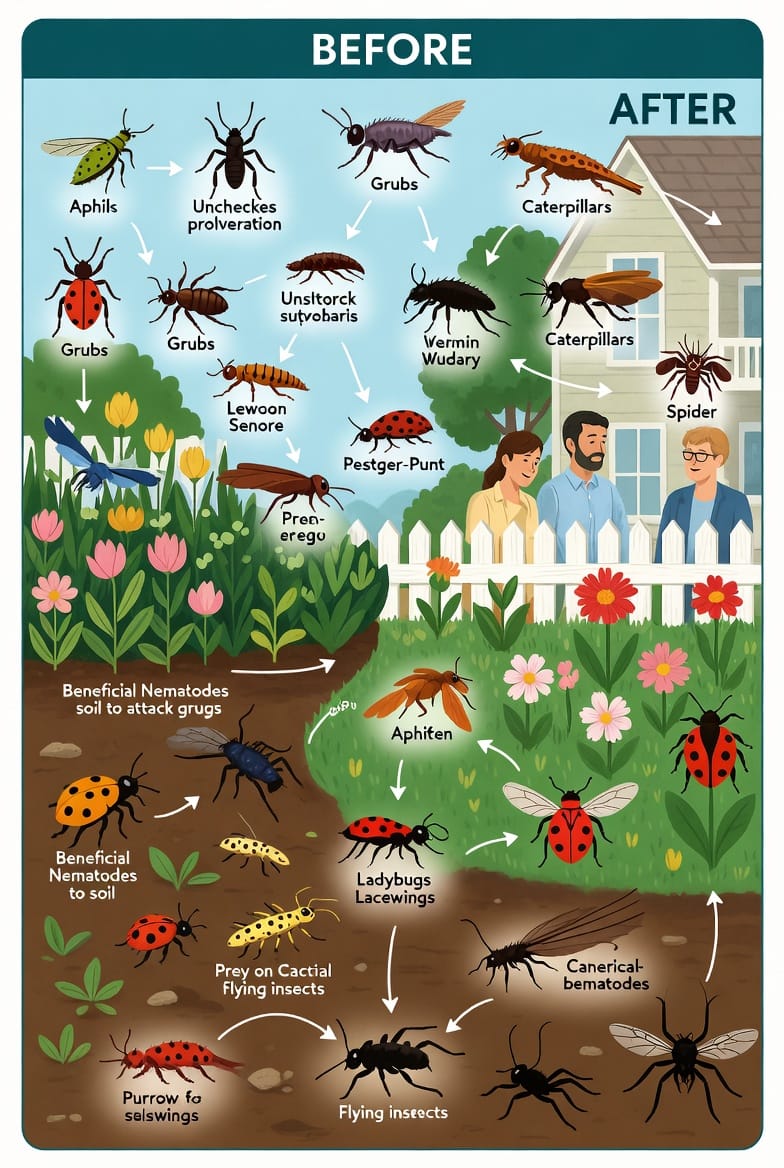
Building a Balanced Ecosystem: Integration and Synergy
The true power of biological pest control emerges when beneficial nematodes and predatory insects work in tandem, creating a synergistic ecosystem. Nematodes handle subterranean threats, preventing pests from maturing into adults that predatory insects then target. This layered approach mimics natural food webs, where diversity curbs overpopulation.
Consider a typical backyard scenario: Grubs damaging roots lead to weakened plants susceptible to aphids. Introducing nematodes curbs the grubs, strengthening plants, while ladybugs and lacewings mop up aerial pests. Over time, this fosters resilience—native predators may even establish permanent populations, reducing the need for repeated releases.
To maximize success, assess your property's needs. Soil tests can reveal pest presence, and companion planting (e.g., marigolds to attract lacewings) enhances attraction. Avoid broad-spectrum insecticides that could harm your new allies; opt for targeted, organic alternatives if needed.
- Ecosystem Benefits: Improved pollination, soil fertility, and wildlife habitat.
- Potential Challenges and Solutions: Dry conditions can limit nematode efficacy—irrigate post-application. For insects, provide nectar sources to retain them.
- Long-Term Impact: Properties using biological methods report 50% fewer pest issues annually, per user surveys from gardening forums.
This holistic strategy not only controls pests but nurtures a thriving, chemical-reduced outdoor space that's safe for all.
Practical Implementation: Getting Started with Biological Controls
Ready to introduce these natural defenders? Start with site preparation: Identify pest hotspots through scouting—dig for grubs or inspect leaves for aphids. Choose high-quality, live organisms from certified suppliers to ensure viability.
For nematodes, dilute in non-chlorinated water and apply evenly; follow up with light watering. Predatory insects arrive in containers—gently shake them onto plants. Timing is crucial: Release during mild weather to avoid extremes that stress the organisms.
Maintenance involves observation—track pest decline and predator activity. If issues persist, layer with cultural practices like mulching or crop rotation.
- Cost Considerations: Initial releases range from $20-50 per 1,000 sq ft, far less than ongoing chemical treatments.
- Safety Assurances: Completely non-toxic to humans, pets, and beneficial wildlife.
- Scaling Up: For larger properties, consult professionals for customized plans.
With patience, your ecosystem will flourish, proving nature's methods are both effective and enduring.
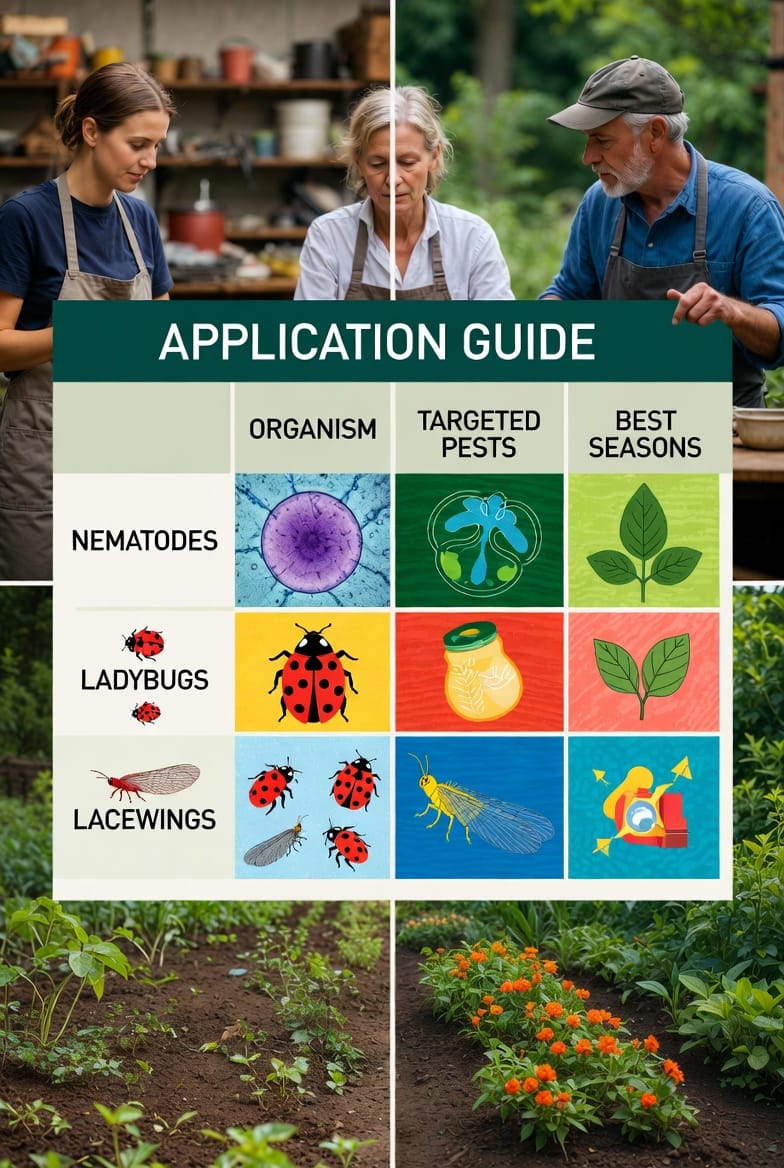
Application Guide: Tailoring Solutions to Your Needs
To make implementation straightforward, here's a practical overview in table form (visualized in the supporting image above for easy reference):
This guide ensures you select the right allies for seasonal challenges, optimizing outcomes.
Environmental and Health Advantages: Why Go Biological?
Beyond pest management, adopting beneficial nematodes and insects yields profound benefits. Environmentally, it minimizes chemical runoff, protecting waterways and wildlife. Health-wise, it creates safer spaces for children and pets, free from pesticide residues linked to allergies and other concerns.
Economically, initial investments pay off through reduced maintenance costs and healthier plants that require less intervention. Case studies from urban farms demonstrate doubled crop yields with biological methods, underscoring their viability.
Rest assured, this isn't experimental—millions of acres worldwide rely on these techniques, backed by decades of research from institutions like the USDA.
- Sustainability Boost: Supports carbon sequestration via healthier soils.
- Community Impact: Encourages neighborly eco-practices, fostering greener neighborhoods.
- Future-Proofing: Adapts to climate shifts, as natural systems are inherently resilient.
Overcoming Common Misconceptions and Challenges
Some hesitate, fearing biological controls are slow or unreliable. In truth, while results may take 1-4 weeks (versus chemicals' immediacy), they provide lasting suppression without rebound effects. Weather variability? Choose hardy species and time releases wisely.
Another myth: These methods are only for experts. Not so—with simple guidelines, anyone can succeed. If doubts arise, professional consultations offer tailored advice.
- Troubleshooting Tips: If predators disperse, add habitat like insect hotels.
- Integration with Other Methods: Pair with traps or barriers for enhanced efficacy.
- Measuring Progress: Use apps or journals to log changes, building confidence.
By addressing these proactively, you'll enjoy seamless adoption.
Success Stories: Real-World Transformations
Homeowners like you have seen remarkable changes. Take a suburban family in California: Plagued by flea larvae in their yard, they introduced nematodes, witnessing a 95% reduction within a month. Their garden bloomed, attracting more birds and butterflies.
In the Midwest, a community garden battled aphids on veggies. Ladybug and lacewing releases not only cleared the pests but boosted harvests by 40%, inspiring workshops for locals.
These anecdotes highlight the transformative potential—your property could be next.
Conclusion: Embrace Nature's Balance Today
In summary, introducing beneficial nematodes and insects to your ecosystem is a smart, eco-friendly path to pest control. From targeting grubs with nematodes to aphids with ladybugs and lacewings, these methods create harmony, reduce chemicals, and enhance vitality.
Ready to transform your space? Balance your ecosystem naturally. Let's cultivate a healthier tomorrow, one natural ally at a time.
Transform Your Yard Organically – Call for a Free Consultation