Concrete Leveling with Polyurethane Foam: The Modern, Minimally Invasive Alternative to Mudjacking
Sunken or uneven concrete surfaces—whether on driveways, sidewalks, patios, or garage floors—pose real safety risks and detract from property value. Traditional fixes like full replacement are costly and disruptive, while older methods such as mudjacking often fall short in longevity and cleanliness. Enter polyurethane foam leveling, a 21st-century solution that delivers precise, durable results with far less hassle.
Switch to Poly Foam Leveling – Call for Fast Results!
Also known as polyjacking or foam jacking, this technique uses high-density polyurethane foam to lift and stabilize concrete slabs efficiently. It addresses the root cause—voids and soil erosion beneath the slab—without the heavy weight, long curing times, or mess associated with conventional approaches.
Why Concrete Settles and Needs Leveling
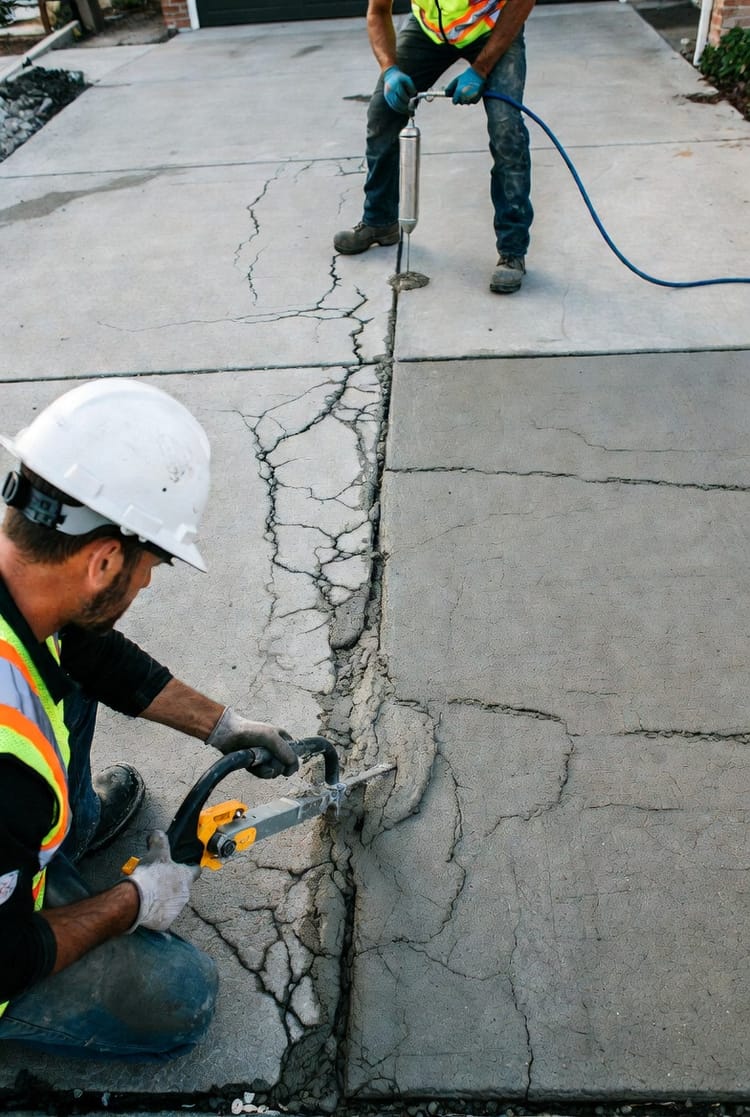
Concrete doesn't sink overnight. Over time, soil compaction, water erosion, poor drainage, or tree root activity creates voids under slabs. This leads to uneven surfaces, tripping hazards, cracks, and even structural stress on adjacent elements like steps or foundations.
Ignoring settlement can worsen issues, leading to more extensive damage or costly replacements. Polyurethane foam leveling intervenes early, restoring stability and preventing further deterioration with a method that's both effective and long-lasting.
Understanding Traditional Mudjacking
Mudjacking (or slabjacking) has been a go-to repair for decades. It involves:
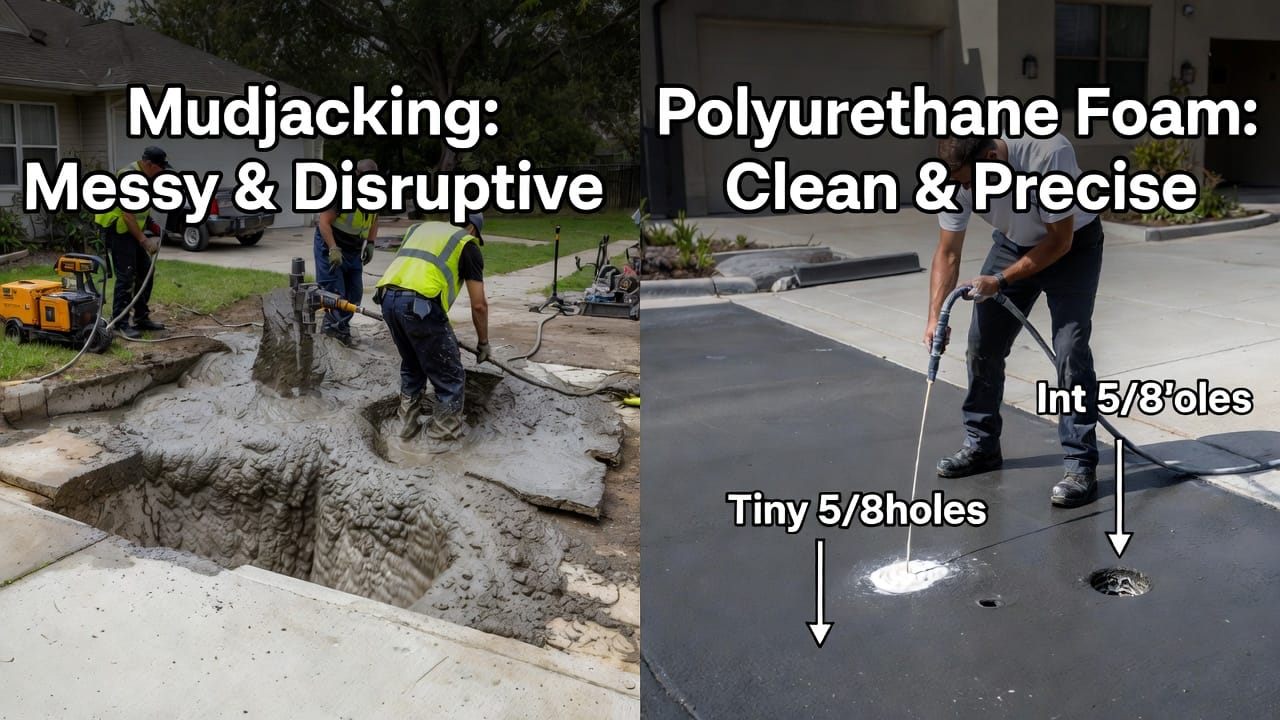
- Drilling larger holes (1-2 inches) into the concrete slab
- Pumping a heavy slurry mixture (typically cement, soil, and water) underneath
- Using hydraulic pressure to lift the slab back to level
While affordable initially, mudjacking has notable drawbacks:
- Heavy material (100-150 lbs per cubic foot) adds significant load to already weak soil, risking future settlement.
- Long curing time—often 24-48 hours before the area can bear weight.
- Messy process with slurry overflow, requiring extensive cleanup.
- Water absorption over time, leading to erosion or breakdown.
- Larger holes leave more visible patches.
These limitations make mudjacking less ideal for modern homeowners and businesses seeking durable, low-disruption fixes.
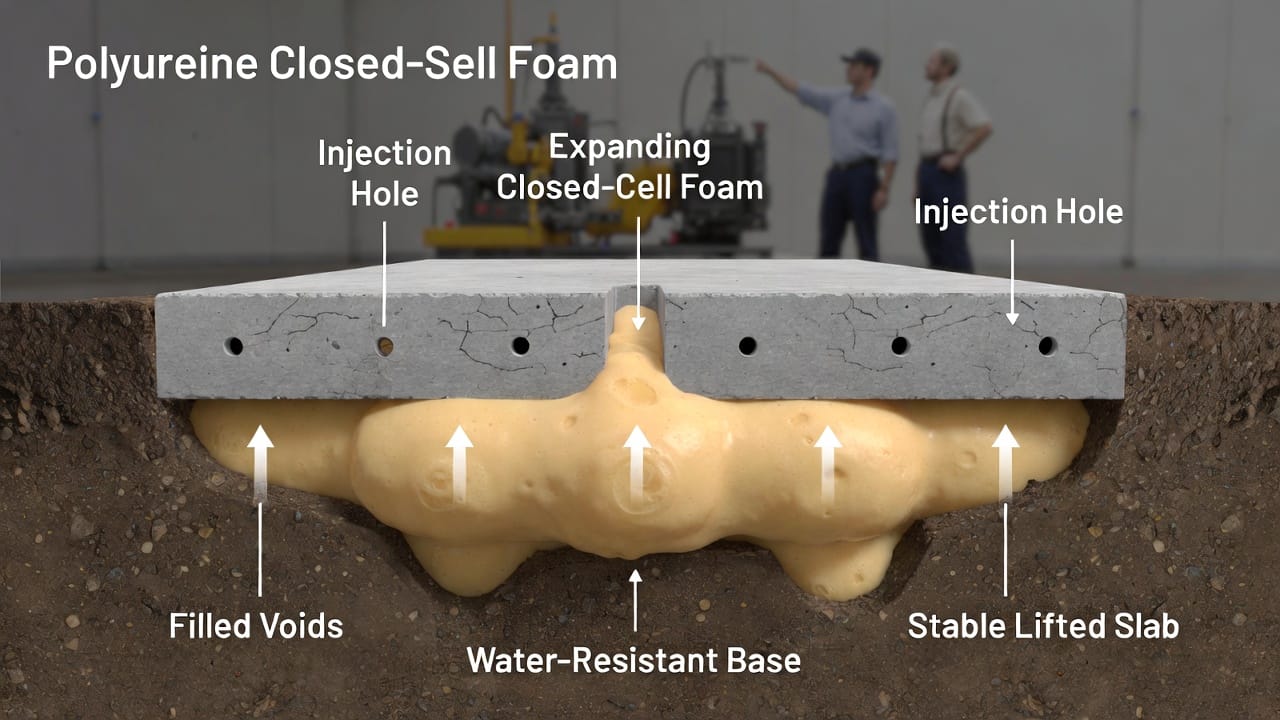
How Polyurethane Foam Leveling Works
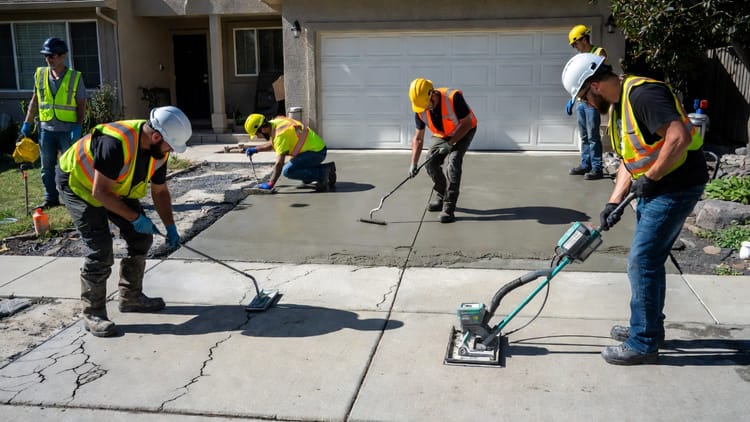
Polyurethane foam leveling represents a significant advancement in concrete repair. The process is straightforward, precise, and remarkably quick:
- Inspection and PreparationTechnicians assess the settlement, identify voids, and mark strategic injection points.
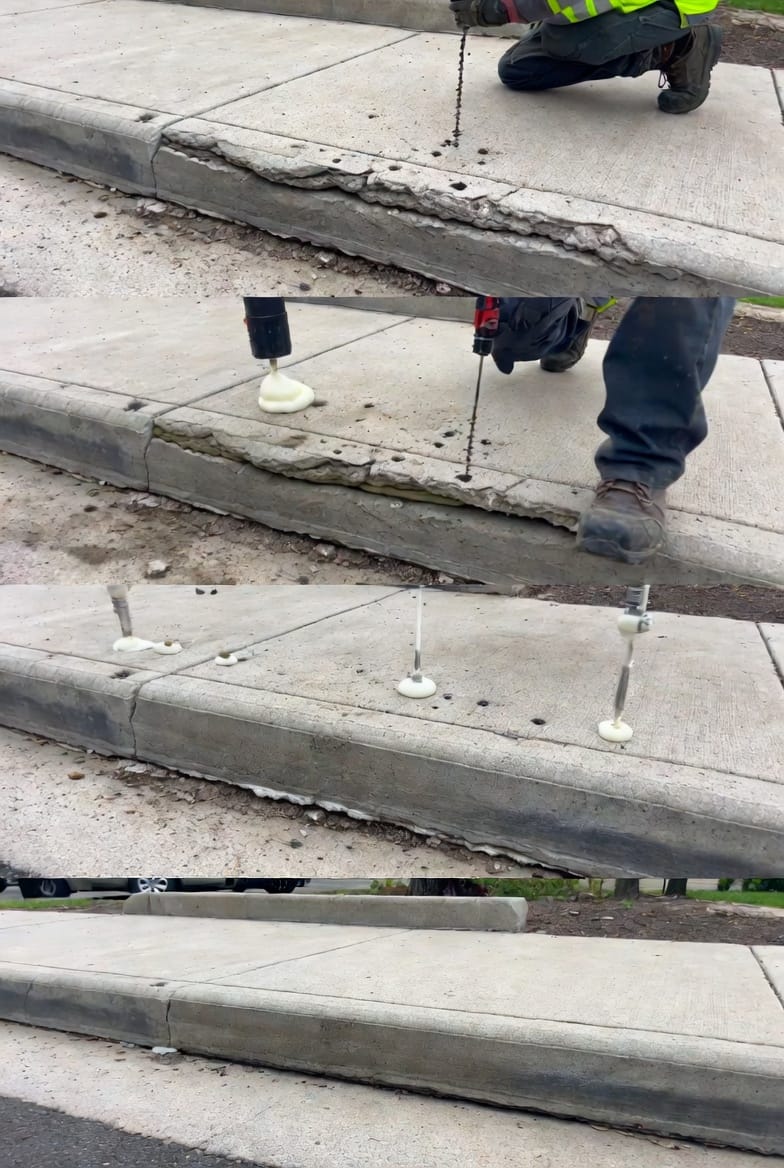
- Small-Hole DrillingOnly tiny holes (about 5/8 inch in diameter) are drilled—far smaller than mudjacking's requirements.
- Foam InjectionA two-part polyurethane mixture is injected via specialized equipment. The components react upon contact, creating an expanding foam that fills voids from the bottom up.
- Controlled LiftingThe foam expands rapidly and predictably, lifting the slab in precise increments. Technicians monitor the process in real time to achieve exact leveling.
- Curing and CleanupThe foam hardens into a solid, closed-cell structure within 15-30 minutes. Holes are patched seamlessly, leaving almost no trace.
The result? A lifted, stabilized slab ready for immediate use—often within the same day.
Key Advantages of Polyurethane Foam Over Mudjacking
Polyurethane foam leveling outperforms traditional methods in several critical areas:
- Lightweight Material — At just 2-4 pounds per cubic foot, it adds minimal weight, reducing stress on underlying soil and lowering re-settlement risk.
- Rapid Curing Time — Fully cures in minutes, not days; drive or walk on it almost immediately.
- Superior Water Resistance — Hydrophobic closed-cell foam repels water, preventing erosion or degradation even in wet conditions.
- Minimal Disruption — Smaller holes mean less patching and a cleaner job site; ideal for occupied properties.
- Precise Control — Expanding foam fills voids completely and allows fine-tuned lifting for accurate results.
- Long-Term Durability — Resists breakdown, provides excellent compressive strength in most applications, and stabilizes soil.
- Eco-Friendly Aspects — Less material volume and no heavy slurry reduce environmental impact.
Homeowners and property managers appreciate how this method restores functionality without the prolonged inconvenience of older techniques.
Common Applications for Polyurethane Foam Leveling
This versatile solution addresses a wide range of concrete issues:
- Sunken sidewalks and walkways
- Uneven driveways and garage floors
- Settled patios and pool decks
- Tilted steps or stoops
- Commercial slabs in warehouses or parking areas
Whether for residential curb appeal or commercial safety compliance, polyurethane foam delivers reliable results.
Is Polyurethane Foam Leveling Right for You?
If your concrete shows signs of settlement—visible cracks, uneven transitions, or tripping hazards—polyurethane foam leveling offers a smart, modern fix. It's especially beneficial when:
- You want a quick turnaround with minimal downtime.
- Preserving landscaping or avoiding heavy equipment access is important.
- Long-term performance in varying weather conditions matters.
Professional assessment ensures the best approach for your specific situation.
Final Thoughts: Embrace Modern Concrete Repair
Concrete leveling no longer means weeks of disruption or short-lived fixes. With polyurethane foam, you get precision, speed, and durability in one innovative package—proving that 21st-century technology can solve age-old problems better than ever.
Say Goodbye to Mudjacking Mess – Call for Clean Foam Injection!