Addressing Foundation Settlement: How Polyurethane Foam Jacketing Lifts and Stabilizes Concrete
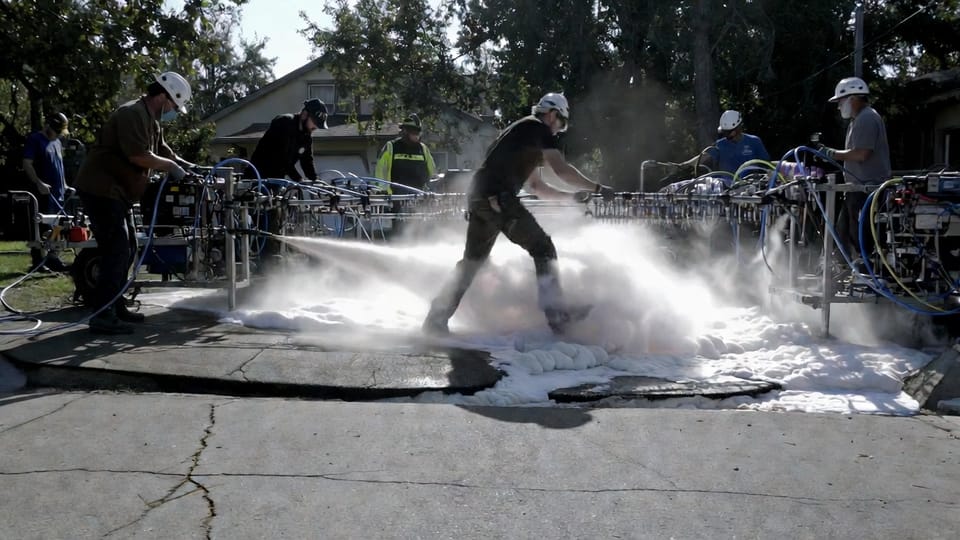
Foundation settlement is a common yet serious issue for homeowners and property managers alike. If you've noticed uneven driveways, cracked sidewalks, or sagging foundations, you're not alone. These problems can lead to safety hazards, reduced property value, and costly repairs if left unaddressed. But there's good news: modern advancements in concrete repair offer efficient, long-lasting solutions. In this comprehensive guide, we'll dive into polyurethane foam jacketing, often hailed as mudjacking 2.0, and explore how it effectively lifts and stabilizes sunken concrete slabs.
Stop Foundation Settlement – Call for Expert Foam Jacketing
As a trusted authority in concrete services, we reassure you that addressing foundation settlement doesn't have to involve invasive excavations or lengthy downtimes. With polyurethane foam injection, you can restore your property's integrity quickly and minimally disruptively. Let's break down the process, benefits, and comparisons to traditional methods, empowering you to make informed decisions for your home or business.
Understanding Foundation Settlement: Causes and Consequences
Before exploring solutions, it's essential to grasp why foundation settlement occurs. Soil beneath concrete structures can shift due to various factors, creating voids that cause slabs to sink. Common culprits include:
- Soil Erosion: Water runoff or poor drainage washes away supporting soil, leading to instability.
- Compaction Issues: Over time, soil naturally compacts under the weight of concrete, especially in areas with expansive clays.
- Plumbing Leaks: Underground pipes can leak, saturating soil and causing it to weaken or erode.
- Tree Roots and Vegetation: Growing roots displace soil, while decaying organic matter creates voids.
- Poor Construction Practices: Inadequate site preparation during initial building can set the stage for future settlement.
The consequences? Beyond aesthetic concerns like cracked patios or tripping hazards on sidewalks, untreated settlement can escalate to structural damage. Foundations may crack, doors and windows might stick, and in severe cases, it could compromise your home's overall stability. Recognizing early signs—such as uneven floors or pooling water near slabs—is key to preventing escalation.
Fortunately, polyurethane foam jacketing provides a proactive, reliable fix. This innovative technique uses expanding foam to fill voids and lift slabs, offering superior results compared to older methods.
The Evolution from Traditional Mudjacking to Polyurethane Foam Jacketing
Traditional mudjacking, also known as slabjacking, has been a go-to for decades. It involves pumping a slurry mixture of cement, soil, and water under sunken concrete to raise it. While effective, it has limitations: the heavy slurry can add weight to already unstable soil, and larger holes (typically 1-2 inches) are needed for injection, leading to more visible patching.
Enter polyurethane foam jacketing—the modern upgrade, or mudjacking 2.0. This method injects a lightweight, two-part polyurethane foam that expands rapidly upon mixing. The foam fills underground voids precisely, lifting the slab to its original level while providing lasting stabilization. Unlike mudjacking's watery mix, polyurethane is water-resistant and won't wash away, making it ideal for areas prone to moisture.
Why the "jacketing" term? It refers to how the foam encapsulates and supports the slab like a protective jacket, ensuring even distribution and minimal future movement. This approach is particularly suited for driveways, sidewalks, patios, and even foundation slabs, where precision and durability matter most.
How Polyurethane Foam Injection Works: A Step-by-Step Process
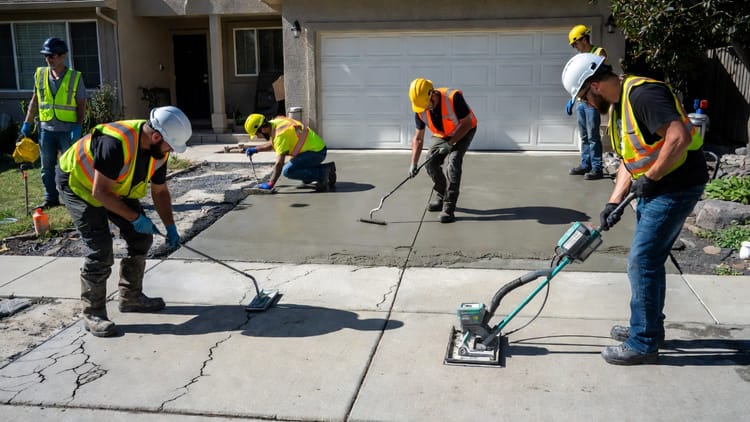
The beauty of polyurethane foam jacketing lies in its simplicity and efficiency. Our experienced technicians follow a structured process to ensure optimal results:
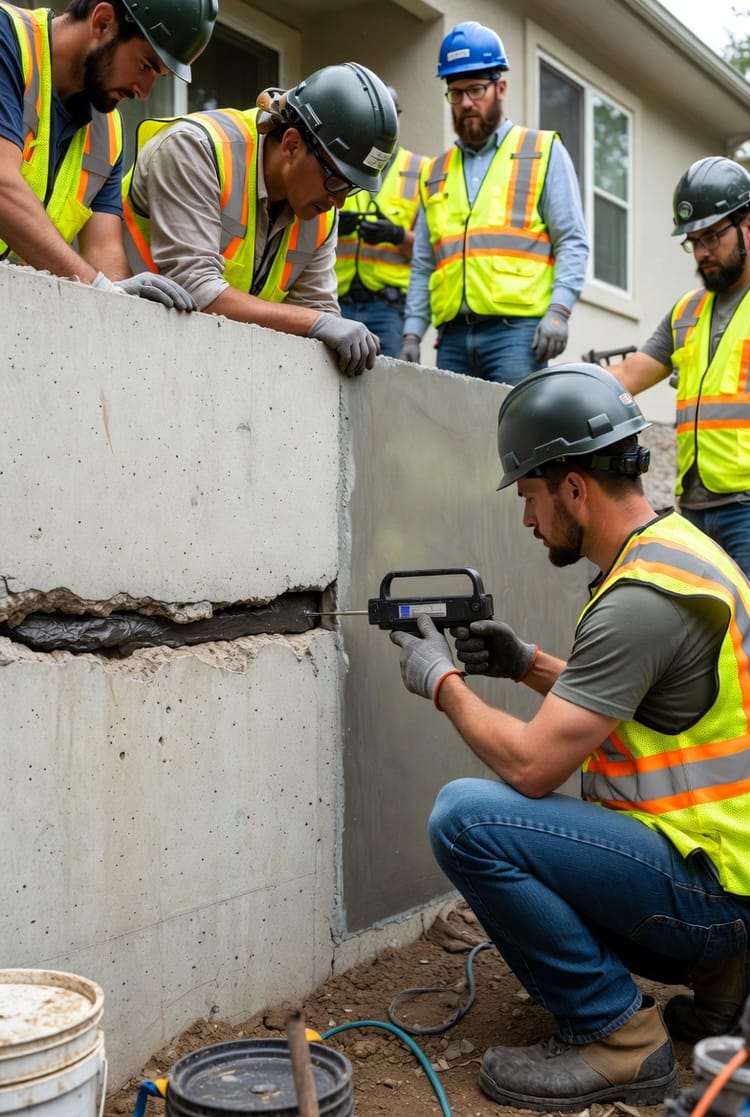
- Site Assessment: We begin with a thorough inspection to identify settlement extent, underlying causes, and the best injection points. This includes measuring slab levels with precision tools.
- Drilling Small Holes: Unlike mudjacking's larger ports, we drill penny-sized holes (about 5/8 inch) strategically across the affected area. This minimizes surface disruption.
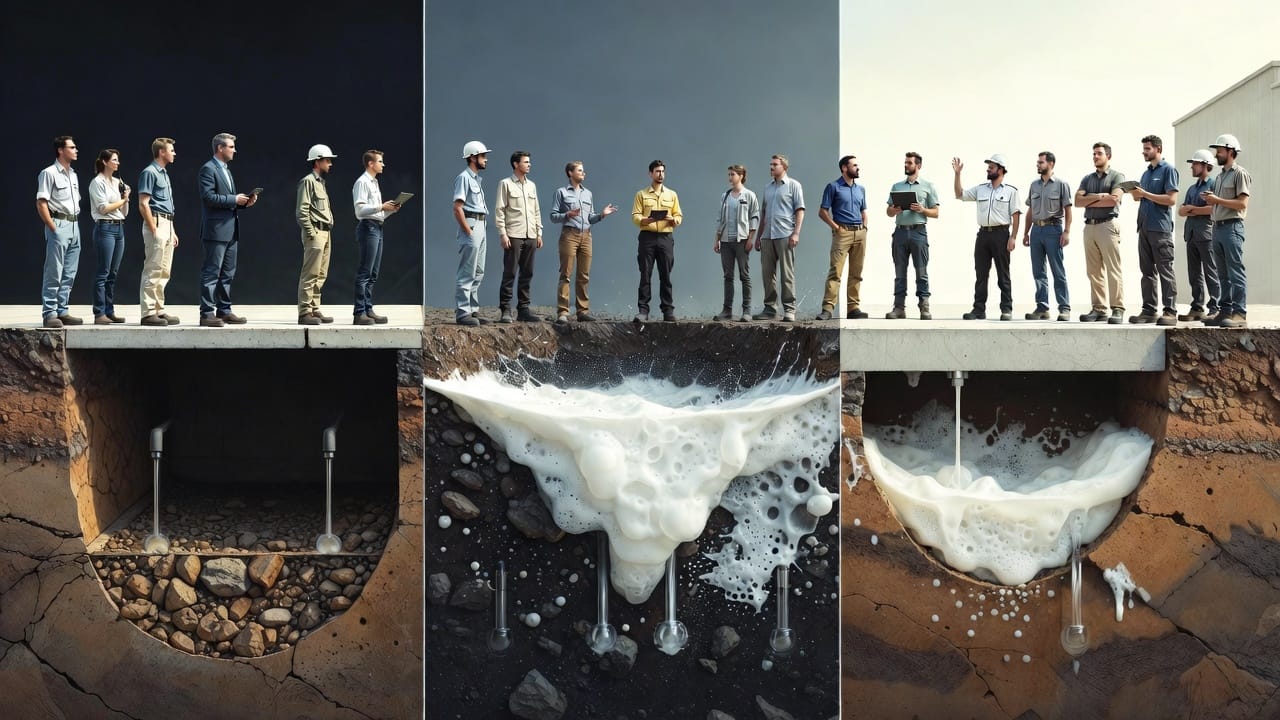
- Foam Injection: A specialized pump injects the liquid polyurethane components through the holes. As they mix, the foam expands up to 25 times its volume, filling voids and exerting upward pressure to lift the slab.
- Leveling and Monitoring: Real-time monitoring ensures the slab rises evenly. The foam sets in minutes, allowing immediate use in many cases.
- Sealing and Cleanup: Holes are sealed with matching concrete patches, leaving a nearly invisible finish. The site is cleaned, restoring your property to normal.
This process typically takes just a few hours for most residential jobs, with full cure in 15-30 minutes—far quicker than mudjacking's day-long wait.
Key Benefits of Polyurethane Foam Jacketing Over Traditional Methods
What sets polyurethane foam apart? Its properties make it a superior choice for long-term concrete stabilization. Here's a detailed look:
- Lightweight Composition: At just 2-4 pounds per cubic foot, the foam doesn't burden weak soil like mudjacking's 100+ pounds slurry, reducing the risk of further settlement.
- Water Resistance: Closed-cell foam repels water, preventing erosion in damp climates or flood-prone areas— a common failure point in traditional methods.
- Rapid Cure Time: Foam hardens in under 30 minutes, allowing foot traffic almost immediately, versus mudjacking's 24-48 hour cure.
- Minimal Invasiveness: Smaller holes mean less patching and a cleaner aesthetic. No heavy equipment is needed, preserving landscaping.
- Environmental Friendliness: Polyurethane is inert once cured, with no harmful leachates, making it safer for groundwater compared to cement-based slurries.
- Versatility: Effective for various surfaces, from residential driveways to commercial foundations, and even indoor slabs like basements.
Homeowners often report immediate improvements in safety and appearance, with warranties extending 5-10 years or more. As an authoritative provider, we stand by the durability of this solution, backed by industry standards.
Real-World Applications: Lifting Driveways, Sidewalks, and Foundations
Polyurethane foam jacketing shines in practical scenarios. For sunken driveways, it corrects uneven surfaces caused by vehicle weight or soil shifts, preventing tire damage and enhancing curb appeal. In sidewalks, it eliminates trip hazards, crucial for pedestrian safety and ADA compliance.
When it comes to foundations, the foam's precision is invaluable. It can stabilize settling footings without excavation, addressing issues like wall cracks or uneven floors. Case in point: A recent project involved a 2,000-square-foot home with a 3-inch foundation drop. Our team injected foam at key points, lifting the structure evenly in under four hours, with no interior disruption.
For larger voids, multiple injections ensure complete fill, and the foam's high compressive strength (up to 100 psi) supports heavy loads reliably.
Comparing Mudjacking vs. Polyurethane Foam Jacketing
To highlight the advantages, consider this side-by-side evaluation:
This comparison underscores why polyurethane is the preferred choice for modern repairs.
Potential Risks and How We Mitigate Them
While polyurethane foam jacketing is highly effective, it's important to address potential concerns transparently. Over-injection could cause over-lifting, but our technicians use laser levels for precise control. In rare cases, underlying soil issues might require additional stabilization, which we identify during assessment.
We mitigate risks through:
- Expert Training: Certified professionals with years of experience.
- Quality Materials: High-density foams from reputable suppliers.
- Warranty Protection: Comprehensive guarantees for peace of mind.
Rest assured, this method has a success rate exceeding 95% in properly assessed projects.
Cost Considerations and ROI
Investing in polyurethane foam jacketing typically costs $5-10 per square foot, depending on slab size and void extent—often less than full replacement, which can run $20-50 per square foot. The ROI? Prevented future damages, increased property value, and energy savings from leveled foundations.
For a personalized quote, factors like accessibility and location play a role, but the quick turnaround minimizes indirect costs like business downtime.
Maintenance Tips Post-Repair
To maximize longevity:
- Improve Drainage: Install gutters and downspouts to divert water.
- Monitor Plumbing: Regular inspections prevent leaks.
- Seal Cracks: Address minor fissures promptly.
- Landscaping Adjustments: Plant trees away from foundations.
With these habits, your repaired concrete can last decades.
Why Choose Us for Your Concrete Needs
As leaders in foundation repair and concrete lifting, we prioritize customer satisfaction with transparent processes and proven results. Our team uses state-of-the-art equipment for every job, ensuring safety and efficiency.
In conclusion, fixing sinking concrete minimally invasively is achievable with polyurethane foam jacketing. This advanced technique lifts and stabilizes slabs effectively, outperforming traditional mudjacking in speed, durability, and convenience. Ready to restore your property?
Say Goodbye to Sunken Sidewalks – Get Your Free Lift Assessment